Algeria and Morocco's battle for water
The long-standing rivalry between Algeria and Morocco is shifting to a new front: the “war for water.”
10/31/20254 min read
Algeria-Morocco: the “war for water” – NAIntel OSINT Briefing #1
Introduction
Since 2021-2022, both countries have been facing intense water stress, and in a well-known context of latent war, water is not only a resource but also a weapon. The long-standing rivalry between Algeria and Morocco has often played out in the sands of the Sahara. With climate change, a new front has opened up: the “war for water.”
According to the UN, the term “water stress” refers to a situation where renewable water resources fall below 1,700 m³ per capita per year, becoming scarce below 1,000 m³ and critically scarce below 500 m³. By way of comparison, in 2025, Algeria will have 242 m³ per capita, well below the critical thresholds. Morocco, harshly affected by the drought, as shown by satellite images, is doing better, but still only has around 777 m³ per capita, which is insufficient (data for 2022 – the situation has likely deteriorated since then due to several consecutive years of drought).
The border dispute between the two countries centers on the Oued Guir (Figure 2), a transboundary river that is vital for agriculture and survival in these semi-arid regions.
For businesses on both sides of the border, this situation translates into increased risks to agricultural supply chains, with potential disruptions to date and cereal exports, and opportunities in desalination technologies. But the situation also presents a humanitarian and social risk, especially for women and most fragile populations, creating opportunities for intervention by international NGOs. Policy makers, for their part, must navigate between the imperatives of sovereignty, social crisis, and impossible regional cooperation in a context of low-intensity conflict.
Current situation
The conflict over transboundary water between Morocco and Algeria is intensifying without armed escalation, but with increased rhetoric from the authorities, especially on the Algerian side.
Chronology of key events :
2021: Morocco commissions the Kadoussa dam on the Oued Guir, with a capacity of 220 million m³. Algeria accuses Rabat of “systematic drying” reducing the flow to the Algerian dam at Djorf Torba. Satellite images seem to show that water levels were already fluctuating drastically before its construction (Figure 1).
May 2024: At the World Water Forum in Bali, Algerian Minister Taha Derbal accuses Morocco of “obstructing” and “destroying transboundary surface waters.” The Moroccan authorities do not respond, merely stating that the dam is intended to enable large-scale date cultivation.
Critical dam filling levels reached in Morocco in 2024, and likewise in Algeria.
March 2025: Algiers reiterates its accusations via the media, pointing to a 50% drop in the flow of the Oued Guir, drying up Djorf Torba (capacity 365 million m³).
June 2025: Morocco defends its sustainable management, with dams at 39.23% of national capacity, compared to 31.12% in 2024, attributing the declines to drought.
October 2025: Moroccan dams are 32.4% full, Algerian dams are around 35-40% full nationally, with regional variations (56% in eastern Algeria).
Summary of current capacity
Prospective scenarios
Status quo with rhetorical tensions Probability: 70% No escalation on either side since 2021 despite Algerian accusations. The conflict between the two countries remains mainly confined to the diplomatic level.
Trigger: Continued drought without any major events.
Regional consequences: Gradual economic erosion, increased desalination costs. Risk of the situation “fester[ing]” if the governments on both sides fail to grasp the scale of the problem.
Offensive actions in the border region Probability: 25% To secure water supplies: construction of new dams, intensive groundwater extraction
Trigger: New major drought reducing water flows, causing riots and forcing governments to take radical measures. More likely on the Algerian side, given the accumulated delay in freshwater supply vs. population size
Regional consequences: Instability in the Maghreb, impact on population movements and food security, escalation that could lead to military clashes.
Significant risk of revolts and riots (Morocco 2017, Algeria 2024)
Significant risk of water shortages (already frequent in Algeria, including in large urban areas)
Cross-border cooperation Probability: 5%
Relations between the two countries remain very tense, as evidenced by the fierce battle between them behind the scenes at the UN during the October 31, 2025 meeting on the renewal of MINURSO and the Resolution on Western Sahara. This scenario is inconceivable without a settlement of the underlying historical disputes between the two countries.
Possible trigger: International pressure following a shared climate crisis with significant migratory consequences, particularly for Europe.
Recommended actions – Economic agents
Companies and economic agents operating in this region must secure their operations against water risk.
Diversify suppliers: Reduce dependence on the Figuig-Béchar areas. Source dates from Tunisia or Egypt (contracts +20% volume).
Audit water consumption: Map usage by site (FAO Aquastat tool). Reduce by 15% through internal recycling.
Invest in technology: Partnerships with IDE Technologies (desalination) or Netafim (drip irrigation). Return on investment (ROI): 3-5 years.
Cover risks: Take out “water stress” insurance (turn to partners such as AXA Climate). Cover up to 30% of exposed assets.
Regional lobbying: Promote the creation of a bilateral water resource management body, similar to the Organization for the Development of the Senegal River.
What to keep an eye on
The Moroccan and Algerian governments must act quickly to mitigate the water crisis. Here are the concrete measures to watch for:
Morocco:
Accelerate the 2020-2050 National Water Program: launch five new desalination plants by 2027 (target: +500 million m³/year)..
Reduce network losses (currently 35%): rehabilitate 1,000 km of pipes per year.
Algeria:
Finalize the Guetrani transfer (200 km, operational in 2025): connect 300,000 inhabitants in Bechar.
Repair network leaks (40% losses): invest USD 2 billion by 2030.
Bilateral: Creation of a cross-border observatory for the Oued Guir (Danube model) with real-time IoT sensors. Conditional on the restoration of diplomatic relations.
Conclusion
Global risk: MEDIUM.
Next milestone: World Water Forum 2026, in United Arab Emirates from December 2-4, 2026
Monitor both belligerent's declaration and stance
@NorthAfrica Intel
October 2025
Classification : Public

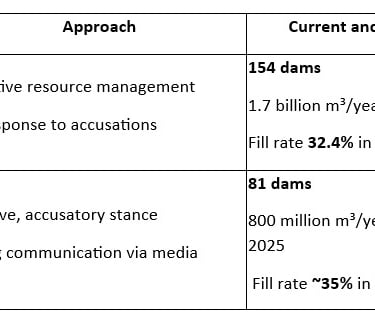
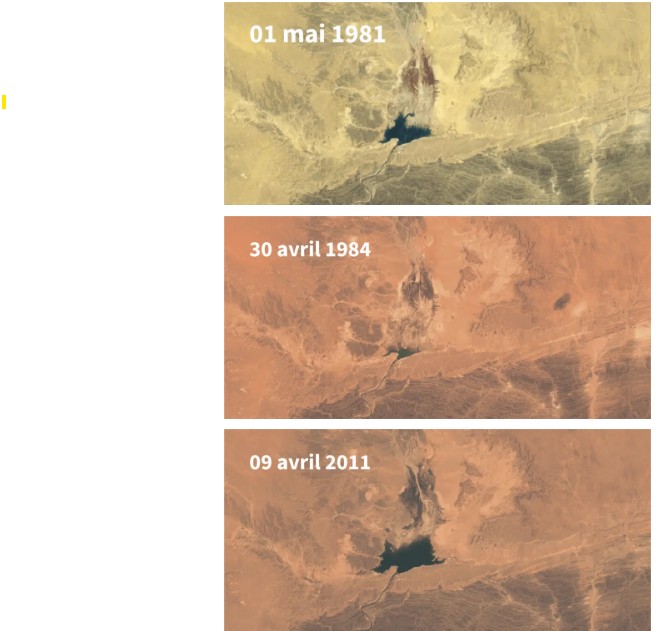
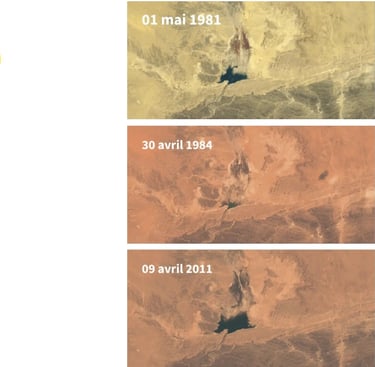
Figure 1 - Evolution of water levels over time before construction of the Kadoussa dam Credit: Media24.ma
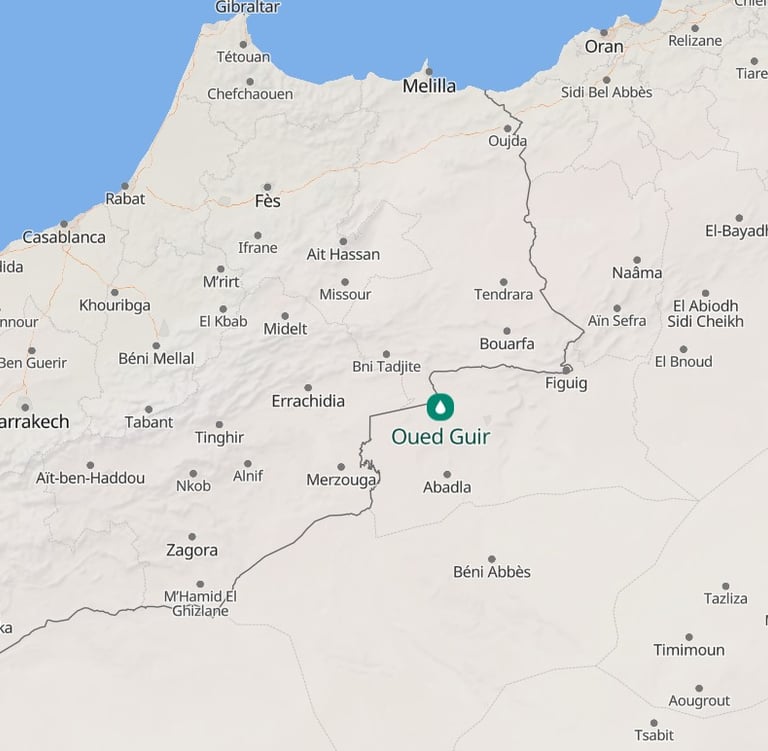
Figure 2 - Oued Guir map, at the Algeria-Morocco Border